Climate Science
The greatest systemic and exponential risk to the Philadelphia area and its real estate market is climate change. This is already evident in the insurance market. As climate-related damage accelerates, homeowners insurance will become increasingly difficult to afford or obtain. Florida offers a glimpse of the future, having effectively moved toward government-subsidized insurance as private coverage retreats. For in-depth information, along with additional links and resources, see: Climate Change and Insurance: Costs, Availability, and Sustainability.
How Is Climate Energy Hitting You?
Backyard Experiments
How Is the Climate Energy Hitting You? is a collection of backyard experiments conducted in conjunction with you—the reader. The goal is simple: to look at how the increased energy in the climate system is showing up in our everyday lives.
Is it becoming more extreme, more frequent, and more persistent? Are the changes becoming stranger—or even disturbing?
- Chester County, It’s Shocking: Lightning Strikes Are Surging
- Philadelphia and Southeastern PA: Heatwaves, Severe Storms, Flash Floods, Flash Droughts, Extreme Winds, Microbursts, Tornadoes
- The I-95 Corridor: Severe Storms, an Expanding “Tornado Alley,” Straight-Line Winds, and the Urban Heat Island
- Penn's Sylvania: Ecosystem Conversion, Vapor Pressure Deficit (VPD), Transpiration, Hydroclimatic Whiplash
- West Chester, Pennsylvania: Hydroclimatic Whiplash and Urban Flooding — Unfortunately, Worms Can't Swim
- West Chester, Pennsylvania: Hydroclimatic Whiplash and Flash Droughts — Unfortunately, Millipedes Can't Swim
- The Backyard Experiments: Hydroclimatic Whiplash, Soil Degradation, Insect Decline, and Ecosystem Collapse
- Backyard Megapitfall Traps: A Changing Ecosystem for Frogs, Spiders, and Worms
- The Jersey Shore and Florida Coast: Sea Level Rise, Inverse Barometer Effect, Wind Stress, Flooding, Saltwater Intrusion
The Jersey Shore’s Future: From Floating Casinos to Elevated Beaches
Four Distinct Microbursts Struck the Philadelphia Region Simultaneously
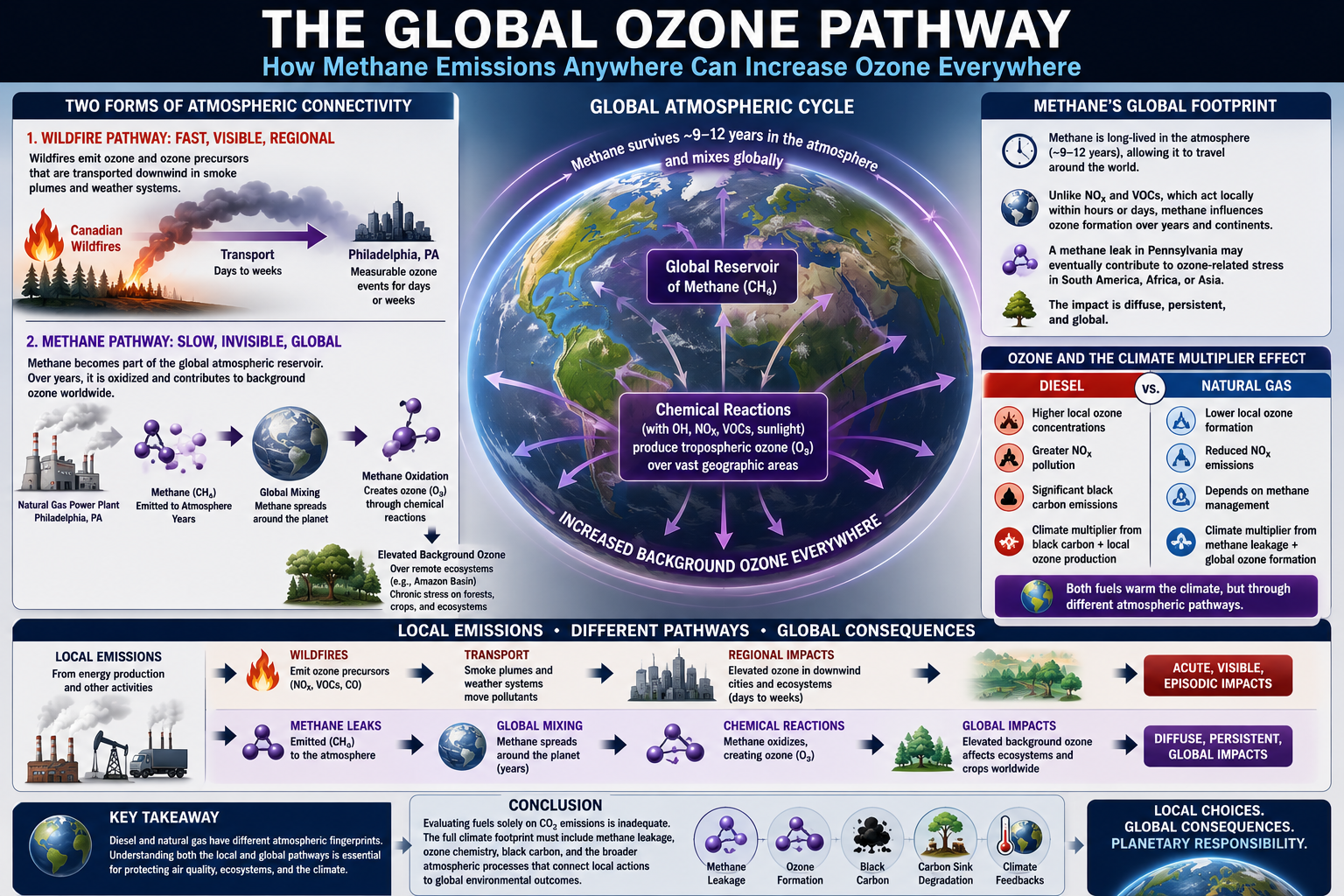
Philadelphia and the Ozone Feedback
This paper examines how wildfires in Canada create dangerous ozone in Philadelphia and how emissions from Philadelphia power generation contribute to ozone formation affecting ecosystems in the Amazon.
Rossby Waves, Climatic Whiplash, and the Nonlinear Destabilization of Atmospheric Circulation
The amplification of Rossby wave patterns and atmospheric instability is contributing to prolonged heat waves, persistent flooding, extended droughts, polar outbreaks, and other compound climate extremes throughout the Philadelphia region.
Accelerating Sea-Level Rise and the Nonlinear Collapse of Mid-Atlantic Farmland
Hydroclimate Whiplash in the Philadelphia Region
Pennsylvania Case Study: Polar Amplification and the Collapse of Climate Stability
The Philadelphia Experiment: Violent Rain
Crossing the Air Quality Threshold
Saltwater Intrusion: The Delaware River Case Study
Plymouth Meeting: Cradle of the Climate Crisis
The Decline of Penn's Sylvania
Pennsylvania’s Forests: A Race to Find Climate-Resilient Species
Brandywine Creek and the New Flood Regime
Global warming has inflicted irreversible damage on our environment, a consensus echoed by nearly all scientists. Indeed, climate change poses a profound challenge. Our planet is witnessing conditions that increasingly jeopardize human habitation. The critical question now is whether we can adapt swiftly enough.
Human-induced climate change is a dynamic component of an intricate and unordered system, as per chaos theory. This implies that global warming is accelerating exponentially in a complex manner. Over the period from 1992 to the present, we have presented compelling evidence, proposed remedies to mitigate climate change, and amassed valuable information through the engagement of millions with this climate model. Your participation has been invaluable. The incontrovertible data underscores that human-induced climate change is rapidly deteriorating our habitat.