America’s Freshwater Stress Test
Saltwater Intrusion, Drought Amplification, and the Destabilization of U.S. Water Security
Much of the United States is already experiencing measurable impacts of climate change on freshwater availability. These are not abstract projections for the end of the century — they are unfolding now, altering drinking water supplies, agricultural viability, ecosystem stability, and energy production.
From the megadrought-stricken Colorado River Basin to saltwater-intruded aquifers in Florida, New Jersey, and the broader Mid-Atlantic, the nation’s water systems are under compounding stress. What was once considered episodic drought is becoming structural aridification. What was once rare coastal salinization is becoming a recurring hydrological crisis.
This is not a regional anomaly. It is a systemic shift.
The Expanding Geography of Saltwater Intrusion
Saltwater intrusion occurs when rising sea levels, storm surges, and reduced river discharge allow ocean water to migrate upstream into freshwater systems. The process is amplified by drought, groundwater over-extraction, and declining snowpack.
Utilities across the Eastern United States are increasingly forced into emergency water releases and infrastructure adaptations decades earlier than historical precedent would suggest.
The Delaware River as a Case Study
The Delaware River Basin provides drinking water to over 14 million people, including Philadelphia and large portions of New Jersey, Delaware, and New York.
Under normal hydrological conditions, the river’s salt front remains near river mile 70. During the severe drought of fall 2024, the Delaware River Basin Commission (DRBC) was forced to release billions of gallons of upstream reservoir water to prevent saltwater from advancing further inland.
- During that drought, the salt front advanced to mile 89.
- Philadelphia’s primary drinking water intake lies at mile 110.
- During the historic 1960s drought, the salt front reached mile 102.
The trend line is clear: lower river flows combined with rising sea levels are pushing the salt boundary progressively farther upstream. The buffer between safe municipal supply and salinity thresholds is shrinking.
Emergency reservoir releases are not a long-term solution. They represent reactive management in a system undergoing structural change.
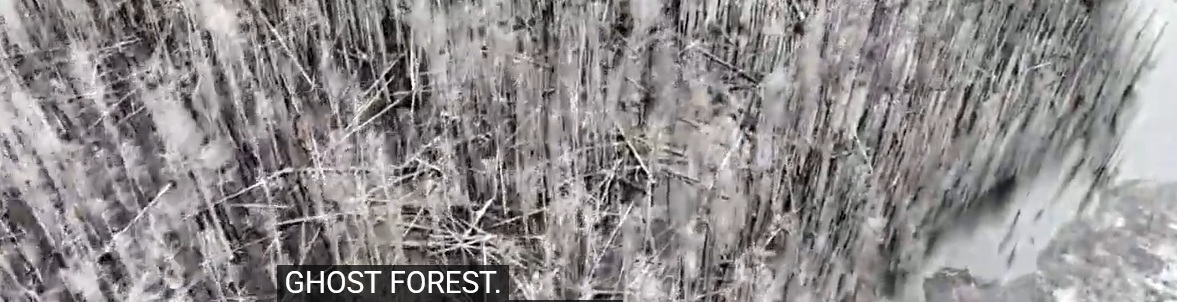
Ecological Consequences: The Rise of “Ghost Forests”
Saltwater intrusion does not merely threaten municipal intakes. It destabilizes entire ecosystems.
In coastal New Jersey, Atlantic white cedar forests — once spanning approximately 140,000 acres — have declined to roughly 20,000–25,000 acres. Rising seas, storm surges (including impacts from Superstorm Sandy), and chronic salinization have produced widespread tree mortality.
The result is the emergence of “ghost forests”: stands of dead, bleached trunks where freshwater-dependent ecosystems once thrived.
Saltwater intrusion alters soil chemistry, disrupts root function, and prevents regeneration. Once soils become saline, remediation is slow, costly, and often incomplete. Salinity shifts microbial communities, reduces nutrient cycling efficiency, and accelerates peat oxidation — converting long-standing carbon sinks into potential carbon sources.
This pattern is not isolated to New Jersey. Similar transitions are occurring across the Chesapeake Bay, the Carolinas, the Gulf Coast, and low-lying Atlantic estuaries.
Compound Stressors: Drought, Heat, and Sea-Level Rise
- Sea-Level Rise – Global mean sea level is rising and accelerating due to thermal expansion and land ice loss.
- Reduced River Discharge – Warmer winters and altered precipitation timing reduce sustained freshwater outflow.
- Drought Intensification – Higher temperatures increase evapotranspiration, reducing soil moisture and runoff.
- Groundwater Depletion – Coastal aquifer over-pumping lowers freshwater pressure, allowing saline migration inland.
Together, these forces compress the freshwater lens in coastal systems and shift the balance toward marine dominance.
Infrastructure and Agricultural Impacts
- Municipal water treatment systems
- Agricultural soils and crop productivity
- Wetland biodiversity
- Power plant cooling water supplies
- Transportation and buried infrastructure (via corrosion)
Once salinity infiltrates irrigation systems, crop yields decline sharply. Water utilities are increasingly forced to invest in expanded monitoring, desalination contingencies, and upstream storage management — raising long-term ratepayer costs.
A National Pattern, Not an Isolated Event
- The Colorado River Basin faces chronic structural deficit.
- The Mississippi River has seen record low stages affecting navigation and supply.
- Florida aquifers are experiencing inland saltwater encroachment.
- Gulf Coast estuaries are becoming increasingly saline.
The Emerging Reality
- Increased hydrological extremes (flood-drought oscillations)
- Rising baseline salinity in coastal systems
- Declining ecological resilience
- Escalating infrastructure costs
The notion that freshwater scarcity is exclusively a Western problem is outdated. Eastern river systems — historically considered water-secure — are now exhibiting similar vulnerability patterns.
Water security is no longer simply a question of storage capacity. It is a question of systemic resilience under accelerating climatic and oceanographic change.
If current trajectories continue, large portions of coastal river basins — including the Delaware — will face recurring saltwater crises that strain both ecosystems and metropolitan supply systems.
This is not speculative. It is already happening.